

Acoustic Wall Panels in Dubai: Sound Control for Homes and Offices
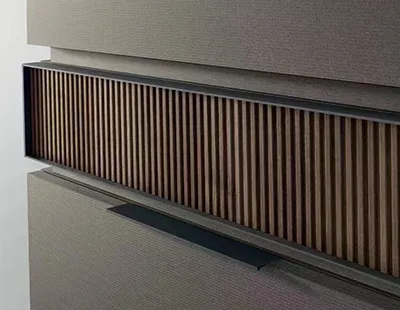
Dubai's most popular interior features — marble floors, high ceilings, open-plan layouts and glass partitions — are also the ones that create its most common acoustic complaint: excessive echo, sound carry between rooms and general noise fatigue in the home. Acoustic wall panels solve this problem with remarkable efficiency, and they do it while simultaneously creating some of the most visually striking wall features in modern Dubai interiors.
Why Sound Control Matters in Dubai Homes
The acoustic profile of a typical Dubai villa or apartment works against comfortable living in several ways:
- Marble and porcelain tile floors — hard, reflective surfaces amplify footsteps, impact noise and airborne sound
- High ceilings — standard in Dubai villas, they create long reverberation times (echo) that make conversation at normal volumes tiring
- Open-plan kitchens and living areas — noise from one zone carries throughout the entire space
- Glass walls and curtain walls — fully reflective at audio frequencies
- Minimal soft furnishings — the minimalist aesthetic popular in Dubai removes the soft absorption that fabrics, books and carpets provide in traditional homes
The result is a space that looks beautiful but sounds harsh. Acoustic wall panels directly address this by introducing sound-absorbing mass to vertical surfaces — the most effective position for acoustic treatment.
How Acoustic Wall Panels Work
Sound energy travels in waves that reflect off hard surfaces. Every reflection adds to the background noise level and creates reverberation (echo). Acoustic panels work by converting sound energy into heat through absorption within the panel's porous or fibrous core material. The denser and thicker the panel, the more low-frequency energy it absorbs.
Panel types used in Dubai projects:
- Fabric-wrapped acoustic panels — a rigid fibre glass or polyester core wrapped in stretched fabric. Absorbs mid and high frequencies effectively. Available in any fabric colour.
- Acoustic foam panels — open-cell foam in geometric shapes. Effective at high frequencies; less suited to formal residential settings
- Perforated MDF or wood panels — decorative panels with a perforated face and acoustic absorption layer behind. Combines aesthetic appeal with acoustic performance
- Wood slat acoustic panels — the most popular residential choice in Dubai: natural timber slats over a felt or acoustic fleece backing. Sound passes through the gaps between slats and is absorbed by the backing material
Wood Slat Acoustic Panels: The Dubai Favourite
Wood slat panels with an acoustic backing have become one of the most popular interior features in Dubai because they solve two problems simultaneously: they look stunning and they improve the acoustic environment. The natural oak or charcoal-stained slats against a dark felt or acoustic fabric backing create a feature wall with genuine depth and warmth while absorbing sound effectively from the adjacent living area.
Absorption performance depends on:
- Slat spacing — wider gaps allow more sound energy to reach the backing material
- Backing material thickness — 9 mm acoustic felt vs 25 mm polyester fibre significantly affects low-frequency absorption
- Panel area — larger covered area produces greater overall room improvement
Where to Use Acoustic Panels in Dubai
- Living rooms and family rooms — one or two feature walls significantly reduces echo in open-plan spaces
- Home cinemas — the most acoustically demanding room in any home; fabric-wrapped panels on side walls and ceiling are standard for audiophile-grade performance
- Meeting rooms and boardrooms — fabric panels reduce speech intelligibility problems in glass-walled conference rooms
- Podcast and recording studios — increasingly common in Dubai homes and offices; acoustic panels are essential for clean audio
- Restaurants and cafes — open-plan F&B spaces in Dubai frequently add fabric acoustic panels to control noise levels at full capacity
- Kids' playrooms — reduce impact and airborne noise transfer to rooms below or adjacent
Acoustic Performance vs NRC Rating
Acoustic panels are rated by their Noise Reduction Coefficient (NRC), which runs from 0 (no absorption) to 1 (100% absorption). A well-specified fabric-wrapped panel achieves an NRC of 0.85–0.95 at mid and high frequencies. Wood slat panels with acoustic backing achieve NRC 0.65–0.80. For a home cinema or recording studio, specify panels with NRC 0.9 or higher.
Aesthetics Without Compromise
Modern acoustic panels are designed to be the aesthetic centrepiece of a room, not an afterthought. Rex Line's range includes:
- Fabric-wrapped panels in 40+ fabric colours, including premium linen, velvet and wool blends
- Wood slat acoustic panels in natural oak, charcoal, walnut and white
- Perforated wood panels in geometric patterns with coloured backing
- Custom shapes and sizes for non-standard walls and feature alcoves
Book a free site visit and our acoustic and interior team will assess your room, measure the reverberation, and recommend the right panel type, coverage area and layout to solve your sound challenges — while creating a feature wall that elevates the room aesthetically.